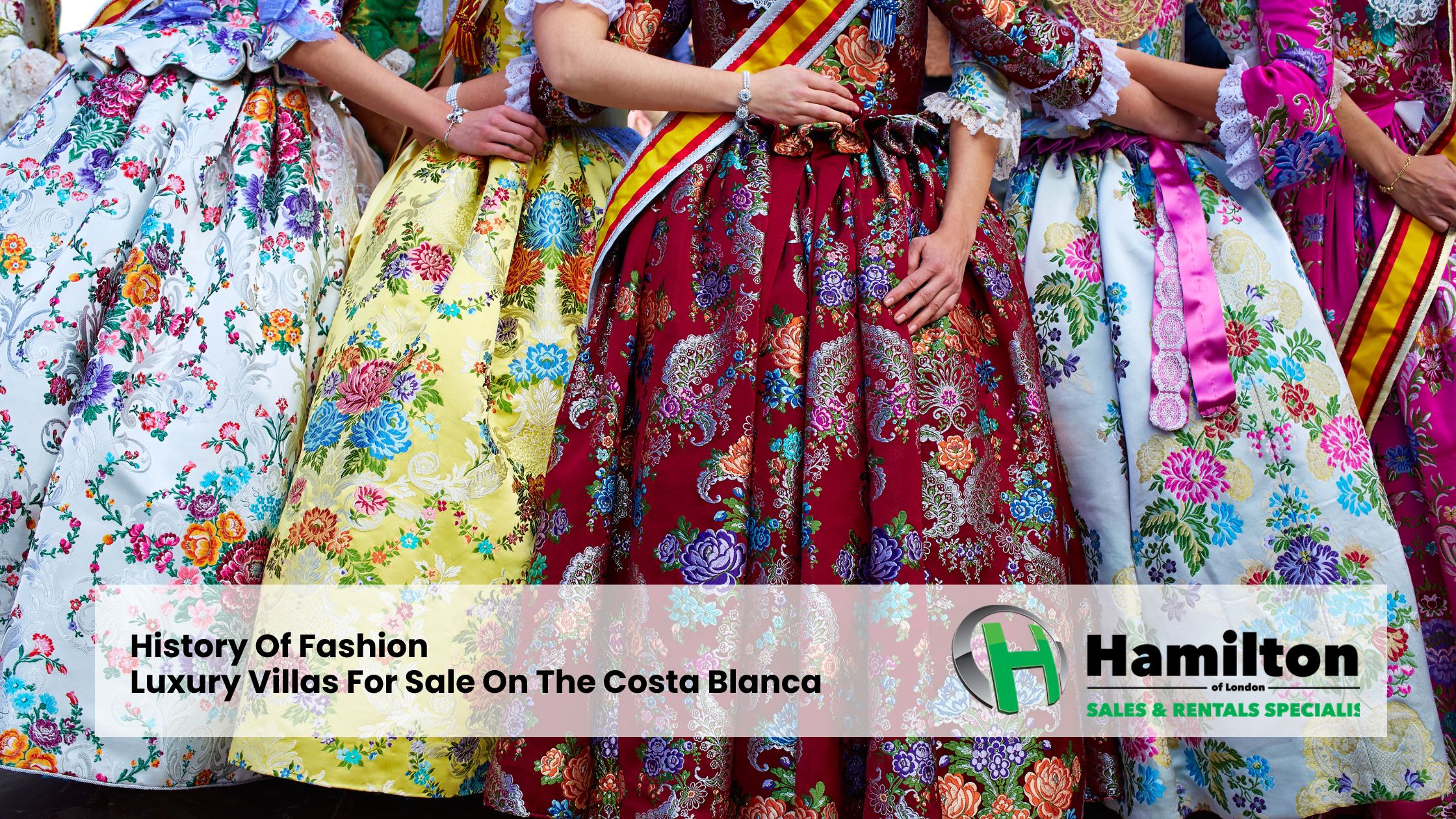
Investing in a villa for sale on the Costa Blanca also means embracing a new life in a country full of history, traditions, and beliefs that go much deeper than the sun, sand, and sangria most people think of. The area's history and cultural changes have also influenced the food produced and the fashion worn.
The story of fashion on the Costa Blanca starts with the Iberian Peninsula’s earliest inhabitants who wore practical clothing made from wool and linen. Men wore tunics and trousers and ladies wore long, draped dresses. When the Romans arrived, some sophistication was introduced, and colourfully embroidered toga-like garments became popular, while footwear such as sandals became desirable.
The arrival of the Moors in the 8th century introduced more elaborate clothing styles to the Costa Blanca region, with clothing made from rich fabrics including silk and brocade becoming common amongst the elite. Gold and silver jewellery became symbols of status and ladies’ clothes included flowing veils and head coverings reflecting the modesty of the Islamic Moorish lifestyle. Men wore turbans and loose-fitting garments.
Eventually, the Christian kingdoms gradually retook Spain and European styles of clothing were reintroduced. The Renaissance period focused on a more structured form of fashion on the Costa Blanca, with women’s dresses featuring bodices and full skirts and men’s clothing becoming more tailored, with doublets and breeches becoming very popular. Similar styles of clothing can now often be seen during local fiestas.
This period in history saw a shift towards more practical working clothes for the fishermen and farmers in places on the Costa Blanca where it is now popular to buy a villa towns like Moraira, which was once a small fishing community, or in the agricultural area of the Jalon Valley. Cotton and hemp fabrics were used because of their durability. Nonetheless, some regional flair did exist with embroidered blouses and bright sashes that could add some personality to an outfit and be protected by an apron when working.
A new era of fashion began on the Costa Blanca as the increase in tourism during the 20th century brought international influences. The bikini made its controversial arrival in the 1940s and, in the 1950s, the Mayor of Benidorm allowed this revealing beachwear to be worn on the town’s beaches. General Franco considered the bikini to be shocking. However, at this time Benidorm was putting the Costa Blanca on the map by transforming from a little seaside village into the tourist town that we see today.
The decision meant that Pedro Zaragoza Orts was threatened with excommunication by the Bishop of Orihuela. This might have been what brought the town out of obscurity and led to the popularity of the Costa Blanca as a tourist destination and a place for people to buy property but, at that time, the women who wore these scandalous items were described as “shameless foreigners”, and the bishop threatened to put signs outside the town proclaiming it to be “Hell!”. In 1961, on the “Day of Forgiveness”, faithful Catholics carried a huge wooden cross up to the highest point overlooking this town of sin, and it remains there to this day, ironically as a tourist attraction.
Also, this period saw the introduction of Coco Chanel’s little black dress and women on the Costa Blanca also took to wearing this now iconic item of ladies’ wear. However, here it was worn with local footwear such as espadrilles and comfortable rope-soled sandals.
Later, in the 1980s, there was a trend for sportswear, particularly among the older generation who increasingly chose to take long winter package holidays on the Costa Blanca and wore an array of brightly coloured, matching shell suits.
Today this popular Spanish region sees a delightful blend of traditional, modern and international clothing, with local boutiques offering unique handcrafted pieces. Trends come and go but the emphasis in the warm Mediterranean eco-climate is to fuse comfort and style with a growing demand for sustainable fashion. When you buy a villa on the Costa Blanca, the main thing you will learn is that you make your own style and wear what is comfortable and suitable for you.
Over the centuries, the Costa Blanca has been influenced by Iberian, Roman, Moorish and Christian cultures. Each period introduced new fabrics, colours and styles which can still be seen today during local fiestas and traditional celebrations.
Yes. Traditional Valencian costumes are regularly worn during fiestas, religious celebrations and Moors and Christians festivals throughout the Costa Blanca, helping to preserve the area's cultural heritage.
The Mediterranean climate means lightweight clothing is suitable for much of the year. Comfortable footwear, summer clothing and a light jacket for the cooler winter evenings are generally all that is required.
Absolutely. The region offers everything from international fashion brands and shopping centres to small independent boutiques selling locally made clothing, footwear, jewellery and leather goods.
The Costa Blanca offers over 300 days of sunshine each year, beautiful beaches, excellent food, a relaxed Mediterranean lifestyle and a wide choice of villas, townhouses and apartments for sale on the Costa Blanca, making it one of Spain's most desirable places to live.
Updated in July 2026 by the Hamiltons Real Estate team.