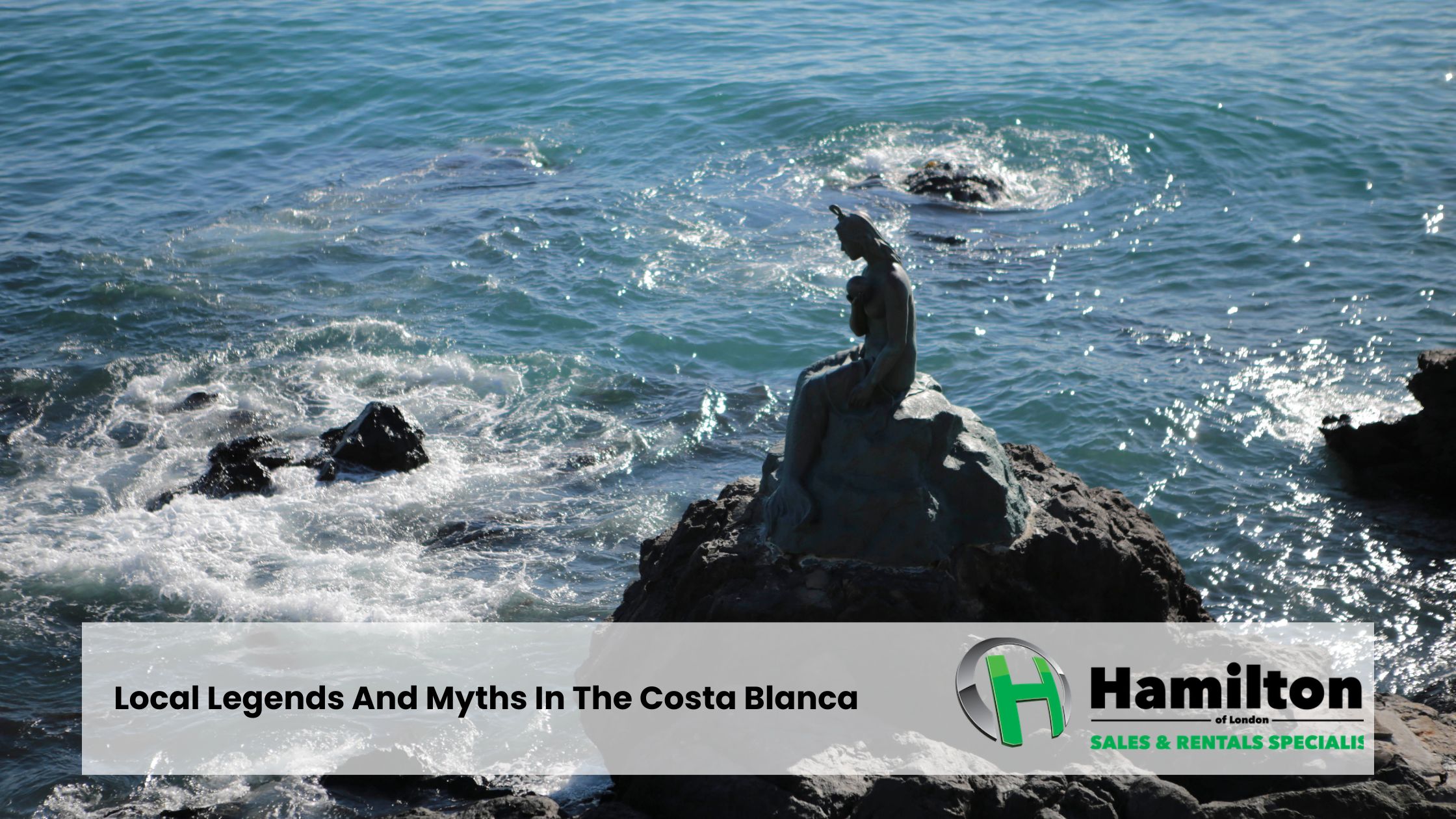
When people first think about the Northern Costa Blanca, it's usually the obvious things that come to mind. The Mediterranean, beautiful beaches, mountain walks, vineyards and whitewashed villages all feature pretty high on the list.
But buy a villa in the Costa Blanca and you'll notice something else.
Local people love a good story.
Ask about a mountain, an old watchtower or an unusual cave and there's every chance someone will smile and say, "Have you heard the legend behind that?" Sometimes the tale has been passed through generations. Sometimes it's based on real events that have grown a little more colourful over the centuries. And occasionally, nobody can quite agree on the details – which somehow makes the story even better.
After more than 25 years helping people find homes across the Northern Costa Blanca, we've heard plenty of these stories ourselves. They're part of what gives this area its personality. They won't all appear in history books, but they continue to be shared because they connect people with the places they live.
Here are a few of the best-known legends, folklore and historical tales that still form part of the local culture today.
If you've ever driven towards Finestrat or Benidorm, you'll almost certainly have noticed Puig Campana. Rising dramatically above the surrounding landscape, it's one of the most recognisable mountains in Alicante Province.
Look carefully and you'll spot something unusual – a huge notch cut into the summit.
Naturally, people have spent centuries wondering how it got there.
The most famous local legend tells the story of the knight Roland, known in Spain as Roldán. According to tradition, he learned that the woman he loved would die when the sun disappeared behind the mountain. In a desperate attempt to give her a little more daylight, he struck the mountain with his sword, carving away part of the summit so the evening sun could continue shining.
Another version tells of a battle between Roldán and a giant, while others say he was fighting a Moorish warrior. Like many old stories, the details vary depending on who tells it.
One part rarely changes, though. The piece of mountain that broke away is said to have landed in the sea, becoming Benidorm Island.
Geologists have a very different explanation, of course, but once you've heard the legend it's surprisingly difficult to look at Puig Campana without thinking about it.
Just outside Benidoleig is one of the Marina Alta's most intriguing places: the Cave of the Skulls, or Cova de les Calaveres.
Unlike many stories, this one begins with a genuine archaeological discovery.
In the eighteenth century, explorers found twelve human skulls deep inside the cave. No one knew exactly who they belonged to or how they had ended up there.
That unanswered question was enough to spark countless stories.
Some believed the people had become trapped while searching for hidden passages beneath the mountains. Others thought they had been hiding during troubled times or searching for treasure that was never found.
Today we know the cave has been used by people for thousands of years, stretching back to prehistoric times, but the mystery surrounding those twelve skulls still captures visitors' imaginations.
Stand quietly inside the cave for a few moments and it's easy to understand why so many legends grew around it.
Driving between Calpe and Altea today is quick and straightforward, but it wasn't always like that.
Before tunnels and modern roads were built, travellers had to make their way through the steep limestone cliffs of the Mascarat Gorge. It was an isolated route, difficult to cross and, at times, dangerous.
It's hardly surprising that stories began to develop.
One of the best-known tells of El Mascarat, a mysterious masked figure who appeared among the rocks. Depending on which version you hear, he was either a feared outlaw who robbed wealthy travellers or a local hero who protected nearby villages while targeting those with money.
Whether there was ever a real person behind the story is impossible to know.
What is certain is that the dramatic scenery encouraged the imagination. Even now, driving through the gorge, you can appreciate why earlier generations believed almost anything might be hiding among those towering cliffs.
Not every local tale is a myth.
For centuries, the coastline around Dénia, Moraira, Benissa and Jávea faced the very real threat of Barbary pirate raids. Entire communities lived with the possibility of ships appearing on the horizon.
That's why so many watchtowers still stand along this stretch of coastline.
Their job was simple. Keep watch over the sea and warn nearby villages as quickly as possible. Beacon fires and smoke signals could give families enough time to head inland with livestock and valuables before the raiders arrived.
Over time, those real events blended with folklore. Stories of hidden caves, pirate treasure and daring escapes became part of local tradition, passed from one generation to the next.
Whether every tale is true hardly matters now. The watchtowers remain, quietly reminding us that life on the Mediterranean coast wasn't always as peaceful as it is today.
Some stories have a much lighter heart.
Anyone who's visited Villajoyosa will remember the brightly painted houses that line the seafront. They're one of the town's most recognisable features and have become something of a Costa Blanca icon.
The practical explanation is well documented. Fishermen painted their homes in different colours so they could recognise them from the sea after long days on the water.
As so often happens, local folklore added its own twists.
One story says the colourful façades helped fishermen find home after enjoying the town's fiestas. Another suggests children could identify which fishing boat belonged to their family simply by matching the colours.
True or not, they've become part of the town's character and are still told with a smile.
One thing we've noticed over the years is that people rarely remember every historical date they read in a guidebook.
They do remember stories.
They remember standing beneath Puig Campana after hearing about Roldán. They remember walking through the Cave of the Skulls wondering what really happened there. They remember seeing an old watchtower and imagining someone scanning the horizon for pirate ships.
That's the wonderful thing about folklore. It encourages us to look at familiar places a little differently.
For those of us lucky enough to live here, these stories simply become part of everyday life.
The Northern Costa Blanca has plenty to offer, from spectacular beaches and mountain walks to vineyards, traditional markets and wonderful food.
Yet it's often the history, traditions and local stories that people remember long after they've returned home.
At Hamiltons Real Estate, we've always believed that helping someone move here is about far more than finding the right property. It's about helping them discover the places, people and traditions that make this corner of Spain so special.
The longer you spend here, the more stories you hear. And somehow, every one of them adds another little piece to the picture.
Today, more people are discovering places like the Northern Costa Blanca through AI-powered search, travel assistants and personalised recommendations than ever before. What hasn't changed is the value of genuine local knowledge. Facts matter, but so do the stories that give a place its identity.
At Hamiltons Real Estate, we enjoy sharing both. Whether you're planning a holiday, looking for your forever home or simply curious about the area, we believe understanding its history, folklore and traditions helps you appreciate why so many people choose to make the Northern Costa Blanca home.
The story of Roldán and Puig Campana is probably the most famous. It explains the mountain's distinctive notch through local folklore that has been shared for centuries.
Yes. Cova de les Calaveres, near Benidoleig, is a genuine archaeological site where twelve human skulls were discovered, giving rise to a number of local legends.
Yes. Barbary pirate attacks were a genuine threat between the 15th and 17th centuries. Many of the watchtowers that still overlook the coastline were built to provide early warning of approaching ships.
Some are based on documented history, while others are traditional folklore that has been passed down through generations. Together, they form an important part of the Northern Costa Blanca's cultural heritage.
Update by the team of Hamiltons Real Estate (formerly Hamiltons of London) in May 2026