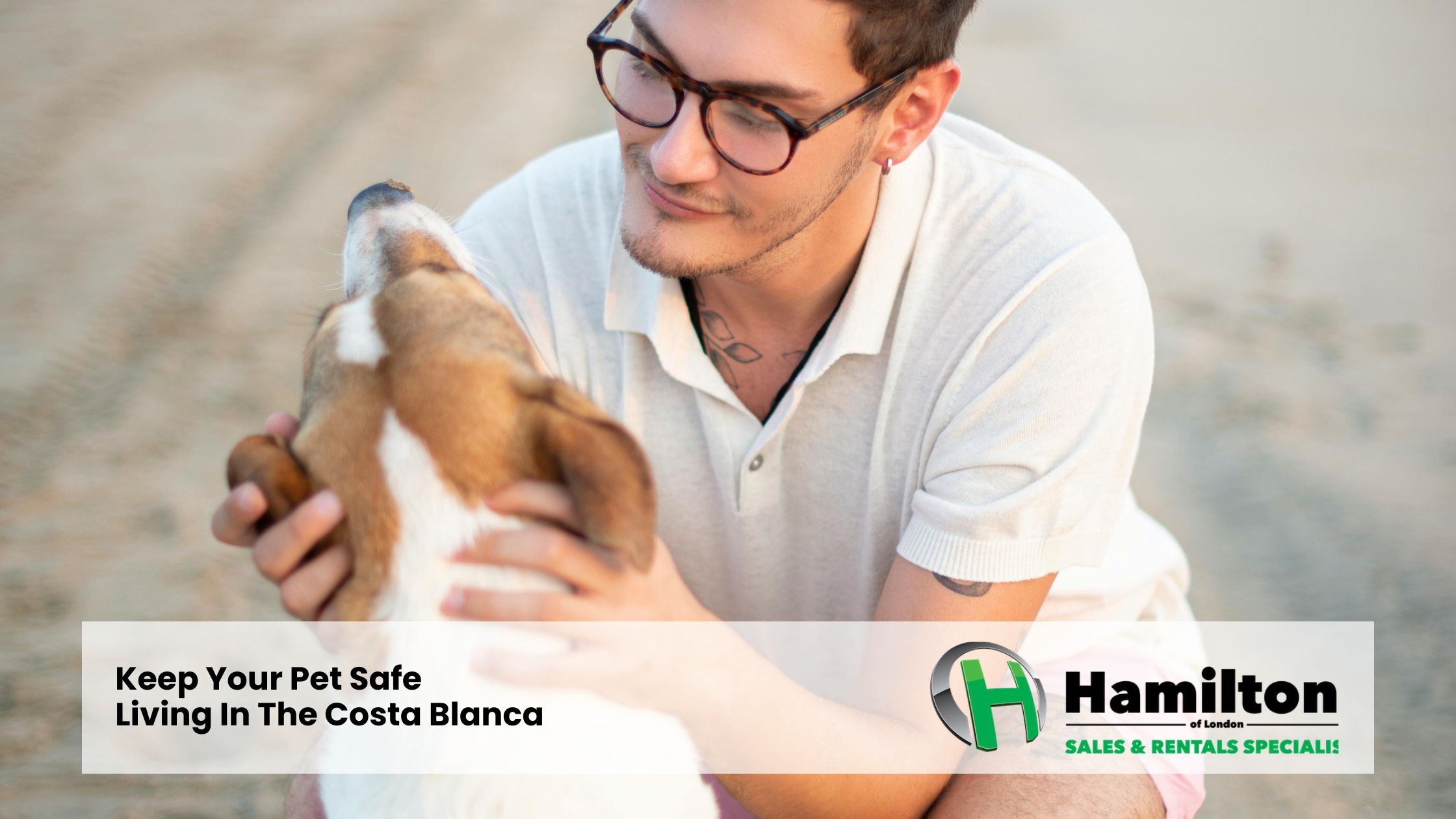
A house becomes a home when you have a furry friend to welcome you, those who already have animals when they are living in the Costa Blanca will no doubt bring them with them. Others who purchase a property in Spain may decide to adopt a rescue cat or dog once they have settled in and this is a great idea. However, while you are adapting to your new way of life make sure that you are also aware of any hazards that may affect you furry friends’ health so that you can keep them safe and secure for as long as they live.
The attraction to most people who choose to live in the Costa Blanca is the wonderful climate and beautiful scenery but, just like we must be cautious about the strength of the sun and safety when swimming this is also a consideration for your pets. Even during the winter, the temperature may well be higher than you have been used to in a more northerly home so never leave your pet in the car, the temperatures can be surprisingly high at all times of the year. Local police will be particularly vigilant during hotter times of the year to ensure animal safety but, their resources are not limitless and tragic stories do still occur that really shouldn’t. Even outside of the car pets can overheat so do keep them out of the sun during lunch time and limit walks to cooler times of the day. Ensure that in your garden there is plenty of shade for them and, even in the house make sure that it is kept cool for your dogs and cats when you go out.
There are many beaches that have restrictions during peak season along the Costa Blanca but, you will be able to find some which are designated for your dogs to enjoy. Make sure that you do clean up after them and again avoid searing temperatures when paws can be badly burnt by the sun, and they could succumb to heatstroke very quickly. Additionally, make sure when you buying a villa in the Costa Blanca what community rules may apply to pets, particularly in the pool and community garden area and if you purchase a private villa and pool ensure that it is fenced to prevent accidental falls and always supervise your dog if you do allow them to swim.
Check out the local Vets and register with the one that you feel most comfortable with – there are plenty to chose from in the Costa Blanca – so that you can keep your pets’ vaccinations up to date. It is the law in Spain that both dogs and cats are microchipped so this is a priority when you adopt, and good rescue centres will guide you to a vet who will make sure that everything is in order before you take your new fur baby home. The climate in Spain is not just attractive to us but, does also provide the environment for parasites to thrive so purchase vet recommended parasite prevention treatments only and protect your animals from flea, tick and mosquito bites. It is especially important to prevent heartworm which is a mosquito borne disease and can be fatal.
Your pet should be registered with your local authority in Spain either with their pet passport and micro-chipping and your vet will be able to help you with this by registering your pet with them they will be registered locally with your council. Poop scoop laws are enforced in Spain, and it is mandatory to clean up after your pet so always carry bags and dispose of waste in the designated bins provided by the council. There are also strict regulations concerning possible dangerous breeds and these may require additional licences and need to be muzzled and, on a lead, when out for walks. All owners of both cats and dogs are also obliged to have them insured in case they cause any injury to anyone by biting, scratching or causing an accident.
The pine trees which are protected in the Costa Blanca do cause some problems and one of these is the processionary caterpillar. These hairy creatures make their homes and build nests in the pine trees and between late winter and early spring they descend from the trees in long lines to search for somewhere to pupate. Their bodies are covered in barbed hairs which can cause severe reactions in both humans and animals so do be careful where you walk your dogs and check your cats if they have been out. Symptoms are skin irritation, itching and rashes, breathing can be affected, and eyes can become very irritated. If you know that the caterpillars are likely to process in your area, and the certainly do in all the areas from Finestrat to Denia along the northern Costa Blanca and inland as well, make sure that you take precautions and keep your pets away from them. If you see them move away and don’t touch them and if there is even the slightest chance that your pet has made contact immediately consult your vet.
This small brown or grey toad with yellow spots is common in lots of areas in Spain including the Costa Blanca and do secrete toxins from their skin glands. While they are not deadly, they can cause irritation to your pets’ mouth and stomach if licked or ingested, symptoms can include drooling, pawing the mouth and vomiting. To try to avoid this occurring keep your pet on a lead especially when walking at dusk or after dark, become familiar with the toad’s appearance and discourage your pet from interacting with them, although when out and about in the garden this can be almost impossible because some breeds are generally just using their hunting instincts so be vigilant about spotting symptoms.
Generally, the water provided through the taps in the Costa Blanca is safe to drink but, can have a higher miner content that could dehydrate your pets. When the weather has been extremely dry, the sodium content may be rather too much for your pet. If your local council or others have mentioned that the water has become unusually salty do keep an eye on your pet and provide them with filtered water which has removed the excess of mineral. Also always make sure that they have plenty of fresh water available to ensure that they don’t become dehydrated, this can be assisted by feeding humid foods in conjunction with any dry foods that they usually have.
When you live in the Costa Blanca the summertime can be exceptionally hot and the pavements and roads soak the heat up. Even if you are walking your dog early in the morning or late in the afternoon more importantly, if the sun is still up, ensure that the ground is not too hot still, protect your animals’ feet. If you have dogs, cats or other animals with which ears, noses etc keep them out of the sun and protect them from sunburn – it can affect animals too!
Also check gardening books about Mediterranean plants, some of the like the popular Oleander can be toxic for animals and if you’re cutting back that beautiful bougainvillea take care that no branches or twigs are left on the ground, their thorns are strong and very sharp.
Don’t let any of this put you off moving forward with your dream and living in the Costa Blanca, forewarned is forearmed and once you have socialised your dog at one of the local dog parks, they can be a great companion. Most restaurants with bars and terraces in Spain welcome well-behaved dogs, and cats who live locally will frequently wander in, sometimes accompanying their owner and canine sibling to see exactly what they are up to when out and about.
Client information from your Hamiltons Real Estate team - 2024